Full Text
Introduction
Ventilator-associated pneumonia is pneumonia developing in a patient receiving invasive mechanical ventilation, typically after at least 48 hours of endotracheal intubation, and remains a major healthcare-associated infection in the ICU [1,2]. Even though surveillance definitions and diagnostic thresholds vary across settings, both the CDC (Centre for Disease Control and prevention) -backed Compendium and the ISID (The International Society for Infectious Diseases) 2024 guidance recognize VAP as clinically important because it is associated with prolonged ventilation, longer ICU and hospital stay, excess antimicrobial use, and higher costs [1,2].
The burden is especially relevant in low- and middle-income countries, where the 2024 ISID guidance notes substantially higher VAP rates than those reported in the United States [2]. In pooled LMIC (Low and middle income countries) data cited by ISID, VAP rates declined over time but remained markedly above NHSN (National Healthcare Safety Network) benchmarks, reinforcing the need for practical prevention strategies that can be sustained in real-world ICUs [2].
For bedside teams, VAP prevention is heavily dependent on nursing reliability because many determinants of microaspiration, secretion clearance, oral hygiene, sedation titration, positioning, feeding safety, and circuit handling are continuously managed by nurses [2,3]. Recent data also suggest that higher compliance with VAP-prevention practices is associated with lower ventilation days, lower length of stay, and lower costs, making nursing adherence central to outcome improvement [3].
Why bundles matter?
Single interventions rarely address the complex pathogenesis of VAP, which involves colonization of the aerodigestive tract, micro aspiration around the endotracheal cuff, biofilm formation on the tube, impaired host defense, and prolonged ventilator exposure [2,3]. Bundles aim to reduce several of these mechanisms simultaneously by packaging a small set of evidence-based practices into a reproducible care process [2].
The ISID 2024 chapter cites a systematic review and meta-analysis by Martinez-Reviejo and colleagues including 36 studies and 116,873 participants, showing that ventilator-care bundles significantly reduced VAP episodes and were also associated with shorter mechanical ventilation duration and reduced hospital length of stay [4]. Another systematic review summarized by ISID found that the most successful bundles were multifaceted, frequently including semi-recumbent positioning, oral hygiene, sedation and weaning protocols, subglottic suction, and cuff pressure control, often with education and compliance monitoring [5].
This matters because implementation quality appears to be as important as bundle content [4,5]. In a 2025 study of nurses’ compliance with VAP guidelines, average adherence decreased during admission and lower compliance was associated with VAP occurrence, longer ventilation, longer stay, and higher cost [6]. The practical lesson is that the bundle must be auditable, teachable, and compatible with workflow.
Principles of a nursing VAP-prevention bundle
A modern nursing bundle should prioritize interventions that improve objective outcomes or consistently lower VAP risk with minimal harm [1,2]. Recent guidance has also refined older practices by discouraging routine oral chlorhexidine and emphasizing toothbrushing, sedation minimization, ventilator liberation, and system-level monitoring [1,2]. Table 1 depicts nursing VAP prevention bundle for critically ill patients.
Table 1: Suggested nursing VAP-prevention bundle for intubated adult ICU patients.
|
Bundle element
|
Nursing action
|
Rationale/evidence
|
|
Head-of-bed elevation
|
Maintain 30–45 degrees unless
contraindicated; document
position every shift and after
procedures.
|
Semi-recumbent
positioning is an essential
practice in adult guidance
and is associated with
lower VAP risk [1,2].
|
|
Oral care
|
Perform daily oral care with
toothbrushing and regular oral
suction; follow local oral-care
schedule.
|
Daily toothbrushing is
recommended, whereas
routine chlorhexidine is not
recommended in adult VAP
prevention guidance [1,2].
|
|
Sedation minimization
|
Use nurse-driven sedation
targets, avoid unnecessary deep
sedation, and coordinate
spontaneous awakening trials
where appropriate.
|
Sedation minimization and
protocols shorten ICU stay
and support ventilator
liberation [1].
|
|
Daily extubation readiness
|
Participate in daily screening for
spontaneous breathing trial and
extubation readiness.
|
Ventilator liberation
protocols reduce duration
of mechanical ventilation
[1,2].
|
|
Avoid reintubation
|
Escalate early for extubation
failure risk, secretion burden,
airway edema, or poor cough.
|
Avoiding intubation and
reintubation is a high-
priority preventive strategy
[1,2].
|
|
Early mobility
|
Coordinate passive or active
mobilization according to stability
and staffing.
|
Early mobilization may
reduce ventilation days
and ICU stay, and may
lower VAP rates [1,2].
|
|
Feeding and aspiration
precautions
|
Keep patient semi-recumbent
during enteral feeding, verify tube
position per protocol, and report
intolerance promptly.
|
Aspiration prevention is
central to VAP
pathogenesis; enteral
feeding is preferred over
early parenteral nutrition
[1,2].
|
|
Ventilator circuit
stewardship
|
Avoid routine circuit changes;
change only if visibly soiled or
malfunctioning; prevent
condensate from entering airway.
|
Routine scheduled circuit
changes do not improve
outcomes and increase
cost; condensate
precautions are
emphasized in LMIC
guidance [1,2].
|
|
Cuff and airway
management
|
Maintain appropriate cuff seal per
local protocol and ensure safe
suctioning technique.
|
Control of leakage and
secretion burden
addresses microaspiration,
though some cuff-
monitoring strategies
remain unresolved [2].
|
|
Hand hygiene and asepsis
|
Perform hand hygiene before and
after airway contact and use
aseptic technique for suctioning
and handling equipment.
|
Hand hygiene is a
recurrent core element in
multidimensional bundle
programs that lowered
VAP rates [2].
|
|
Subglottic secretion
drainage when available
|
Use subglottic-drainage tubes in
patients expected to need
ventilation for more than 48–72
hours.
|
Subglottic drainage is an
additional approach
associated with lower VAP
rates in selected patients
[1,2].
|
|
Compliance audit
|
Use a bedside checklist and unit-
level feedback on bundle
adherence.
|
Compliance monitoring and
feedback are repeatedly
linked with better bundle
performance and lower
VAP rates [2,3].
|
Core bundle components
1. Positioning and aspiration reduction
Head-of-bed elevation to 30–45 degrees remains one of the most consistently recommended elements across reviews and guidelines [1,2]. Although the quality of evidence for hard outcomes is not high, this practice is simple, low-cost, and linked to reduced aspiration and lower VAP rates, which explains why both guidance documents retain it as a foundational measure [1,2].
Positioning should be understood as a dynamic nursing task rather than a one-time order [2]. The patient may drift into a flatter position after transport, line procedures, imaging, or nursing care, so sustained prevention depends on repeated bedside correction and documentation [2].
2. Oral care without routine chlorhexidine
Oral care remains essential, but its content has changed [1,2]. The 2022 SHEA/IDSA/APIC/CDC-endorsed Compendium and the ISID 2024 chapter both recommend daily oral care with toothbrushing and advise against routine oral chlorhexidine for adult ventilated patients because evidence for VAP reduction is inconsistent and some meta-analyses raise concern about possible excess mortality [1,2].
For nursing practice, this shifts emphasis toward mechanical plaque disruption, suctioning of oral secretions, moisturizing the mucosa, and maintaining a structured oral-care schedule [1,2]. In many ICUs, oral care fails not because it lacks evidence but because staffing pressures convert it into an “as needed” task; standardization is therefore crucial [3].
3. Sedation minimization and ventilator liberation
The strongest prevention strategy is often shortening exposure to the ventilator itself [1,2]. Current adult guidance recommends minimizing sedation, using protocols for targeted light sedation, avoiding benzodiazepine-heavy regimens when possible, and performing daily assessments for readiness to extubate through ventilator-liberation protocols [1].
Nurses are central to this step because sedation targets are operationalized at the bedside through frequent reassessment, titration, delirium-aware care, pain control, and communication with physicians and respiratory therapists [1]. When sedation minimization, spontaneous awakening, spontaneous breathing assessment, and mobility are integrated rather than performed in isolation, they appear synergistic in reducing ventilation duration [1].
4. Early mobility and functional preservation
Early exercise and mobilization are now recognized as more than rehabilitation measures [1,2] .According to the Compendium, early mobilization may shorten mechanical ventilation, reduce ICU stay, improve return to independent function, and may lower VAP rates [1].
Nursing implementation requires safety screening, coordination with lines and devices, and graded progression from passive range-of-motion to sitting, standing, or ambulation as feasible [1]. In resource-constrained ICUs, even low-intensity mobility protocols can be meaningful if performed consistently [2].
5. Circuit handling, suction, and secretion control
Ventilator-circuit care is an area where overhandling may be harmful [1,2]. Current guidance recommends changing the ventilator circuit only when visibly soiled or malfunctioning, not on a routine schedule, because scheduled changes do not improve VAP rates or other outcomes and increase costs [1].
The ISID guidance further highlights prevention of condensate reaching the patient as an important bundle element, particularly in LMIC-oriented programs [2,3]. Closed tracheal suction systems remain an unresolved issue in major guidelines, but meta-analytic data summarized by ISID suggest lower VAP incidence with closed versus open suction systems, so their use may be reasonable where available and affordable [2,3].
6. Subglottic drainage and selected adjuncts
Subglottic secretion drainage is no longer considered essential for every patient, but it remains a valuable additional approach for adults likely to require more than 48–72 hours of ventilation [1]. Meta-analyses cited in the Compendium show lower VAP rates with subglottic drainage, although consistent benefit for mortality or length of stay is less clear [1].
From a nursing perspective, these tubes are effective only when integrated into routine secretion management and when staff understand how and when to aspirate secretions safely [1,2]. Selected patients with persistent aspiration risk may also benefit from post-pyloric feeding if gastric intolerance is present, but this is an adjunct rather than a core nursing-bundle component [1,3]. Figure 1 depicts bedside nursing flow for each ventilated shift.
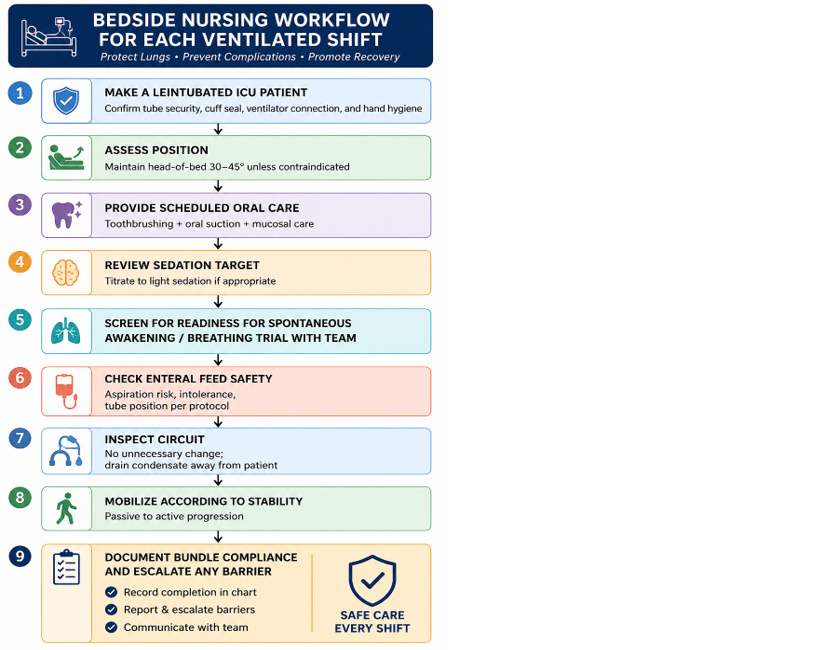
Figure 1: Bedside nursing workflow for each shift.
Implementation in the ICU
A nursing bundle works best when embedded in a broader multidimensional prevention program rather than used as an isolated checklist [2]. The ISID 2024 guidance describes six reinforcing components: a bundle, education, surveillance, compliance monitoring, internal reporting of rates, and performance feedback [2,3,4].
This systems view is supported by multicenter data from LMICs. ISID reports that multidimensional interventions across 374 ICUs in 35 LMICs were associated with sustained reductions in VAP rates over 39 months, with a reported 66% rate reduction from baseline [2]. In Indian ICUs specifically, the same guidance cites an intervention across 21 adult ICUs in 10 cities that reduced VAP from 17.43 to 10.81 per 1,000 ventilator-days [2,4]. Table 2 shows measures that should be emphasized, considered selectively or avoided in VAP prevention.
Table 2: Measures that should be emphasized, considered selectively, or avoided in adult VAP prevention.
|
Category
|
Measures
|
Practical interpretation
|
|
Essential
practices
|
Avoid intubation/reintubation where feasible;
minimize sedation; daily extubation-readiness
assessment; early mobility; head-of-bed
elevation; oral care with toothbrushing; early
enteral nutrition; change ventilator circuit
only if soiled or malfunctioning [1].
|
These should form the default
adult ICU nursing bundle and
daily checklist [1].
|
|
Additional
approaches
|
Subglottic secretion drainage for expected
ventilation >48–72 h; early tracheostomy in
selected patients; post-pyloric feeding in
gastric intolerance or high aspiration risk [1].
|
Add selectively based on
patient profile, device
availability, and ICU rates [1].
|
|
Not
Recommended
routinely
|
Oral chlorhexidine, probiotics, routine stress-
ulcer prophylaxis as a VAP-prevention
measure, early parenteral nutrition, frequent
scheduled circuit change, automated cuff-
pressure control as a routine strategy [1,2].
|
These should not be built into
the standard nursing VAP
bundle as default preventive
steps [1,2].
|
|
Unresolved or
context-
dependent
|
Closed suction systems, silver-coated tubes,
some cuff strategies [2].
|
Use according to local
resources, infection profile,
and institutional policy rather
than universal mandate [2].
|
Barriers and nursing solutions
Poor bundle reliability usually reflects systems problems rather than lack of knowledge alone [2,3]. Staffing shortages, interruptions during procedures, lack of oral-care supplies, poor documentation design, and fragmented nurse-RT-physician communication commonly erode adherence [2,3,5].
Education still matters, however, particularly in under-resourced settings [2]. ISID highlights evidence that healthcare workers’ knowledge of VAP prevention is often suboptimal and that prior ICU training is associated with better understanding and performance, which supports structured orientation, return demonstration, and periodic refresher training for ICU nurses [2,6].
A practical response is to convert the bundle into observable behaviors: head-up verified, oral care done, sedation target achieved, extubation screen completed, mobility attempted, condensate drained safely, and exceptions documented [2,3]. Monthly feedback of compliance and VAP rates to bedside nurses and unit leaders is especially important because feedback loops help sustain change beyond the initial education period [2,3,6]. Figure 2 shows unit- level implementation pathway for VAP prevention bundle.
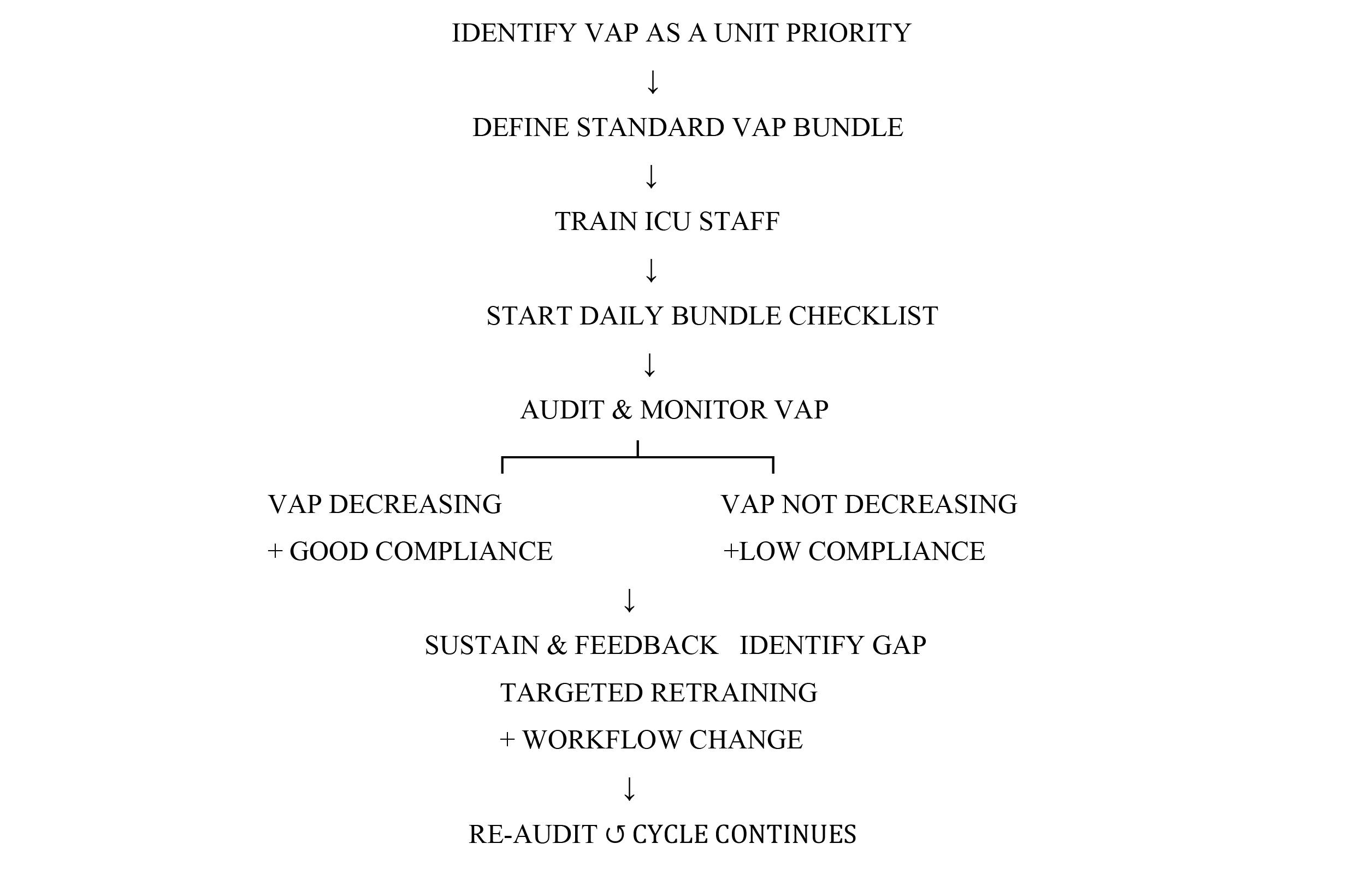
Figure 2: Unit-level implementation pathway for a VAP nursing bundle.
Discussion
The strongest message from current evidence is that VAP prevention depends less on any single “magic bullet” and more on disciplined execution of a few high-yield bedside behaviors [1,2,7-10]. Head-up positioning, toothbrushing-based oral care, sedation minimization, daily ventilator-liberation assessment, early mobility, aspiration precautions, and circuit stewardship represent the practical core of a nursing bundle because they are feasible, scalable, and supported by contemporary guidance [1,2,4,11,12].
Another important shift is de-implementation of outdated practices [1,2]. Routine chlorhexidine oral care was once widely embedded in VAP bundles, but current adult guidance no longer supports its routine use, illustrating how ICU bundles must evolve with evidence rather than persist as historical rituals [1,2,10].
For academic and quality-improvement programs, the bundle should therefore be framed as a nursing-led safety system with measurable process indicators rather than a static list of interventions [2,3]. This framing is particularly relevant in Indian and other LMIC ICUs, where gains depend not only on choosing the right practices but also on ensuring training, supply continuity, bedside documentation, and audit feedback [3].
Conclusion
A nursing bundle to prevent VAP in intubated ICU patients should center on reliable delivery of head-of-bed elevation, toothbrushing-based oral care, sedation minimization, daily weaning and extubation assessment, aspiration precautions, early mobility, and careful ventilator-circuit handling, with selective addition of subglottic drainage in patients expected to require prolonged ventilation. The best outcomes are achieved when these measures are implemented within a multidimensional program of education, surveillance, compliance monitoring, internal reporting, and feedback. For contemporary ICU practice, the priority is not adding more bundle items, but improving fidelity to the interventions that matter most.
Conflicts of interest
Authors declare no conflicts of interest.
References
[1] Klompas M, Branson R, Cawcutt K. Strategies to prevent ventilator-associated pneumonia, ventilator-associated events, and nonventilator hospital-acquired pneumonia in acute-care hospitals: 2022 update. Infect Control Hosp Epidemiol. 2022; 43:687–713.
[2] Al-Harthi F, Al-Noumani H, Matua GA, Al-Abri H, Joseph A. Nurses' compliance to ventilator-associated pneumonia prevention bundle and its effect on patient outcomes in intensive care units. Nurs Crit Care. 2025; 30:70043.
[3] Rosenthal VD, Memish ZA, Bearman G. Preventing ventilator-associated pneumonia: a position paper of the International Society for Infectious Diseases, 2024 update. Int J Infect Dis. 2025; 151:107305.
[4] Martinez-Reviejo R, Tejada S, Jansson M, Ruiz-Spinelli A, Ramirez-Estrada S, et al. Prevention of ventilator-associated pneumonia through care bundles: a systematic review and meta-analysis. J Intensive Med. 2023; 3:352–364.
[5] Mastrogianni M, Katsoulas T, Galanis P, Korompeli A, Myrianthefs P. The impact of care bundles on ventilator-associated pneumonia (VAP) prevention in adult ICUs: a systematic review. Antibiotics (Basel). 2023; 12:227.
[6] Sekihara K, Okamoto T, Shibasaki T. Evaluation of a bundle approach for the prophylaxis of ventilator-associated pneumonia: a retrospective single-center study. Glob Health Med. 2023; 5:33–39.
[7] Martin-Loeches I, Ekkelenkamp M, Torres A. Preventing ventilator-associated pneumonia: a position paper of the European Society of Clinical Microbiology and Infectious Diseases (ESCMID). Int J Infect Dis. 2024; 145:64–76.
[8] Martinez-Reviejo R. Care bundles to prevent ventilator-associated pneumonia: a systematic review and meta-analysis. J Crit Care. 2023; 75:154246.
[9] Intensive Care Society. The Intensive Care Society recommended bundle of interventions for the prevention of ventilator-associated pneumonia. J Intensive Care Soc. 2016; 17:242–246.
[10] Blot S, Cordero-Erausquin M, Rello J. The impact of care bundles on ventilator-associated pneumonia: a systematic review. J Clin Med. 2023; 12:878.
[11] Nemet M, Gmehlin CG, Vukoja M. Ventilator-associated pneumonia in low- and middle-income vs high-income countries: the role of ventilator bundle, ventilation practices, and health care staffing. Chest. 2025; 6:1628–1638.
[12] Sharma J, Mohanty S. Ventilator-associated pneumonia: a persistent menace in the ICU. Indian J Crit Care Med. 2025; 29:285–286.