Full Text
Introduction
Pulmonary edema and generalized edema are commonly encountered clinical conditions that are most frequently associated with heart failure, acute or chronic kidney disease, and liver dysfunction [1]. Severe hypothyroidism may also present with fluid retention, pleural effusion, and generalized edema, mimicking other systemic disorders [2]. Patients with pulmonary edema typically present with breathlessness, cough, and reduced exercise tolerance, whereas generalized edema is often accompanied by weight gain and peripheral swelling [1,2].
Saroglitazar is a novel dual peroxisome proliferator-activated receptor (PPAR)-α/γ agonist used in the management of diabetic dyslipidemia and non-alcoholic fatty liver disease (NAFLD). It has demonstrated beneficial effects on lipid metabolism and liver function and is generally considered safe and well tolerated. However, fluid retention and edema may occur in susceptible individuals, potentially resulting in significant clinical manifestations.
We report a rare case of pulmonary edema with anasarca associated with Saroglitazar therapy in an elderly patient.
Case presentation
A 73-year-old gentleman presented with progressive weight gain, facial puffiness, abdominal distension, and worsening shortness of breath. He reported an increase in body weight of more than 10 kg over a period of approximately three weeks. The symptoms were initially mild but progressively worsened, resulting in significant limitation of physical activity. He also complained of generalized tiredness, reduced urine output (oliguria) for three days, and cough that was more prominent while lying down. A history of fever one week prior to presentation was also noted.
The patient was a known case of hypertension for 13 years, hypothyroidism, dyslipidemia, gastroesophageal reflux disease (GERD), seasonal bronchitis, and non-alcoholic fatty liver disease (NAFLD), which had been diagnosed by FibroScan three weeks earlier. He had undergone cholecystectomy five years previously and had no other significant surgical history.
There was no history suggestive of pre-existing heart failure, chronic kidney disease, chronic liver failure, recent hospitalization, or intravenous fluid administration. The patient was a non-smoker and non-alcoholic. There was no history of exposure to known nephrotoxic agents or recent changes in dietary habits.
Clinical examination
On examination, the patient was afebrile and hemodynamically stable. His body temperature was within the normal range, pulse rate was 78 beats per minute, and blood pressure was 130/80 mmHg. Oxygen saturation was maintained at rest, and the patient appeared comfortable while seated. However, he reported significant exertional breathlessness corresponding to New York Heart Association (NYHA) Class III symptoms and also experienced orthopnea.
General examination revealed facial puffiness, abdominal distension, and bilateral pedal edema, suggestive of generalized fluid retention. Cardiovascular examination demonstrated normal first and second heart sounds (S1 and S2) without any audible murmurs, gallops, or additional heart sounds. Respiratory system examination revealed extensive bilateral fine inspiratory crepitations involving more than half of both lung fields, raising suspicion of pulmonary edema. No focal neurological deficits were observed.
Medications
At the time of presentation, the patient was receiving oral thyroid hormone replacement (137.5 µg daily), telmisartan 40 mg, chlorthalidone 12.5 mg, rosuvastatin 10 mg, vitamin E 400 mg, pantoprazole 80 mg twice daily, lubiprostone 24 µg, and Saroglitazar 4 mg twice daily. Notably, the prescribed dose of Saroglitazar was twice the recommended daily dose. The medications were prescribed on 1/07/2024.
In addition, he had recently received paracetamol (Dolo 650) for fever, etoricoxib 60 mg, and thiocolchicoside 4 mg tablets for symptomatic relief. For respiratory symptoms, he was treated with nebulization therapy along with oral montelukast and levocetirizine. There was no history of recent intravenous fluid therapy, blood transfusion, or use of other medications known to cause significant fluid retention.
Investigations
Initial investigations were undertaken to identify the cause of generalized edema and respiratory symptoms. Point-of-care lung ultrasonography demonstrated extensive bilateral B-lines throughout multiple lung zones, consistent with interstitial pulmonary edema (Figure 1). These findings correlated with the patient's clinical presentation of progressive dyspnea, orthopnea, and diffuse bilateral crepitations on chest auscultation. Lung ultrasound detects subclinical increases in EVLW( Extravascular lung water ) (eg., EVLW>10mg/kg) by visulaising >3 B -lines per intercostal space. It is highly sensitive (>90%) for early fluid overload.
Chest X-ray requires a substantial increase in EVLW (often 30%-50% higher lung water) to detect interstitial or alveolar pulmonary edema. It can experience a clinical delay of 1-2 days compared to USG. Hence lung ultrasound was done for this patient.
Further diagnostic evaluation was performed to exclude common causes of pulmonary edema and anasarca, including cardiac dysfunction, renal impairment, hepatic decompensation, and uncontrolled hypothyroidism. The results of these investigations are presented in the subsequent section.
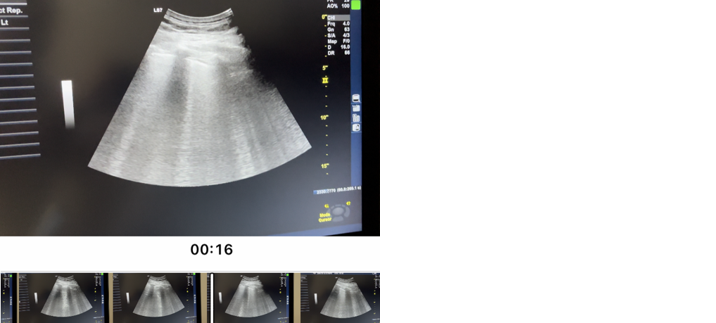
Figure 1: Lung ultrasound – Evidence of pulmonary edema.
Two-dimensional echocardiography revealed normal left ventricular systolic function with an ejection fraction of 64%. There was no evidence of significant structural heart disease or features suggestive of congestive heart failure. These findings helped exclude cardiac dysfunction as the primary cause of the patient's pulmonary edema and generalized fluid retention (Figure 2).
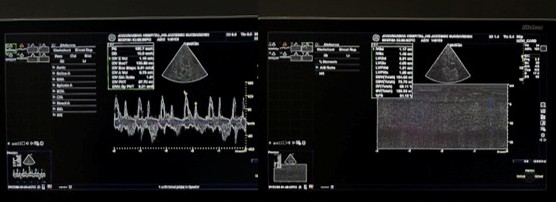
Figure 2: Two-dimensional echocardiogram demonstrating preserved left ventricular systolic function (EF = 64%), E>A pattern, and E/e′ = 11, with no evidence of significant cardiac dysfunction or heart failure.
Electrocardiography (ECG) was performed as part of the cardiac evaluation. The ECG demonstrated normal sinus rhythm with no evidence of ischemic changes, arrhythmias, conduction abnormalities, or features suggestive of cardiac dysfunction. These findings further supported the absence of a primary cardiac cause for the patient's pulmonary edema and generalized fluid retention (Figure 3).
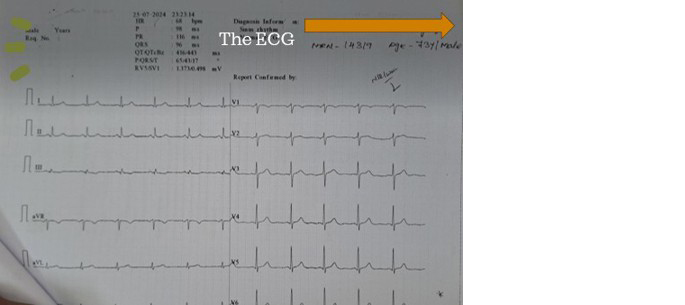
Figure 3: Electrocardiogram showing normal sinus rhythm without significant abnormalities.
Laboratory investigations revealed mild deterioration in renal function. Blood urea nitrogen (BUN) was elevated at 38 mg/dL compared with the patient's baseline value of 30 mg/dL. Serum creatinine had increased to 2.01 mg/dL from a baseline value of 1.47 mg/dL, suggesting acute worsening of renal function in the setting of significant fluid retention. Thyroid function testing demonstrated an elevated thyroid-stimulating hormone (TSH) level of 11.4 µIU/mL compared with a previous baseline value of 3.7 µIU/mL.
Complete blood count was within normal limits, with no evidence of anemia, leukocytosis, or thrombocytopenia. The inflammatory marker C-reactive protein (CRP) was 1.0 mg/dL and did not indicate significant systemic inflammation. Serum uric acid was 7.1 mg/dL. Electrolyte analysis revealed normal serum sodium, potassium, and chloride concentrations of 139 mmol/L, 4.2 mmol/L, and 107 mmol/L, respectively.
Liver function tests, fasting blood glucose, and lipid profile were within normal limits. Coagulation parameters, including prothrombin time and international normalized ratio (INR), were also within the normal range. Collectively, these findings did not support hepatic failure, severe hypothyroidism, or major electrolyte disturbances as the primary cause of the patient's clinical presentation.
Management and outcome
Based on the temporal association between symptom onset and Saroglitazar therapy, together with the exclusion of other common causes of pulmonary edema and generalized fluid retention, an adverse drug reaction to Saroglitazar was considered the most likely diagnosis. Accordingly, Saroglitazar was discontinued immediately, while all other regular medications were continued. The patient was treated with loop diuretics to promote diuresis and relieve fluid overload.
Following initiation of treatment, the patient showed rapid clinical improvement. Over a period of three days, he experienced a weight reduction of approximately 12 kg, accompanied by marked improvement in breathlessness, orthopnoea, facial puffiness, abdominal distension, and peripheral edema. Urine output improved significantly, and respiratory symptoms resolved. The patient remained hemodynamically stable throughout the hospitalization and did not require intensive care unit admission or ventilatory support.
At follow-up, renal function had returned to baseline, with serum creatinine levels normalizing to pre-illness values. Repeat thyroid function testing during convalescence demonstrated normalization of TSH levels. The patient's body weight returned to its baseline level, and there was complete resolution of edema and pulmonary congestion. Diuretic therapy was subsequently discontinued. Long-term treatment with antihypertensive medications, including angiotensin receptor blockers and beta-blockers, was continued without recurrence of symptoms.
Discussion
Anasarca is a severe and generalized form of edema characterized by widespread accumulation of fluid in the subcutaneous tissues and body cavities. It is distinct from localized edema and usually indicates an underlying systemic disorder. Common causes of anasarca include congestive heart failure, acute or chronic renal failure, nephrotic syndrome, hepatic failure, cirrhosis, venous or lymphatic obstruction, and severe nutritional deficiencies [1]. Pulmonary edema frequently accompanies fluid overload states and presents with symptoms such as breathlessness, orthopnea, and cough. Severe hypothyroidism may also result in generalized edema and serous cavity effusions, thereby mimicking other causes of fluid retention [2].
In the present case, the patient developed rapid weight gain, pulmonary edema, ascites, and generalized edema over a short period. A systematic evaluation was undertaken to identify the underlying etiology. Cardiac failure was considered unlikely because the patient had no prior history of heart failure, remained hemodynamically stable, and showed rapid clinical improvement following withdrawal of the suspected drug and administration of diuretic therapy. Although the TSH level was elevated at presentation, hypothyroidism was unlikely to be the primary cause of the clinical manifestations because thyroid hormone replacement therapy had been continued and the edema resolved rapidly with diuretic treatment. Furthermore, repeat thyroid function testing during follow-up demonstrated normalization of TSH levels. Liver function tests and coagulation parameters were within normal limits, making hepatic failure an unlikely explanation. Similarly, nephrotic syndrome was excluded because there was no evidence of significant proteinuria or hypoalbuminemia.
The patient exhibited mild worsening of renal function, as evidenced by elevated blood urea nitrogen and serum creatinine levels. This renal dysfunction may have been multifactorial. The recent use of etoricoxib, a non-steroidal anti-inflammatory drug (NSAID), may have contributed to transient renal impairment through its known effects on renal perfusion and glomerular filtration [3]. Etoricoxib, which is a well-documented drug to cause renal impairment and significant fluid retention. Etoricoxib causes dose dependent nephrotoxicity. The dose of Etoricoxib and the duration used (60 mg two doses) in this patient is unlikely to have caused the renal dysfunction. Also the renal failure occurs if there is pre-existing renal dysfunction which was not present in this patient.
However, the degree of fluid retention, pulmonary edema, and dramatic weight gain observed in this patient appeared disproportionate to the mild renal dysfunction alone. Moreover, renal function returned to baseline after resolution of the episode, suggesting that the renal impairment was likely secondary rather than the primary cause of the fluid overload.
A notable feature of this case was the temporal relationship between the initiation of Saroglitazar therapy and the onset of symptoms. The patient had been receiving Saroglitazar at a dose of 4 mg twice daily, which is twice the recommended daily dose, for approximately one month before the development of breathlessness, cough, generalized edema, and significant weight gain. The exact reason for the dose used in the index patient is not clear. Saroglitazaar had been studied at doses 2 mg, 4mg and 8 mg per day. 2 or 4 mg for MASLD, 4mg for MASLD with diabetes and in trials 8 mg per day had been proven to be completely safe and devoid of Adverse Events for up to 2 weeks.
The symptoms improved rapidly following discontinuation of Saroglitazar and initiation of loop diuretic therapy, supporting a possible causal association. According to the World Health Organization-Uppsala Monitoring Centre (WHO-UMC) causality assessment principles, the temporal relationship and positive dechallenge response strengthen the likelihood of an adverse drug reaction.
Saroglitazar is a dual peroxisome proliferator-activated receptor (PPAR)-α/γ agonist approved in India for the treatment of diabetic dyslipidemia and hypertriglyceridemia in patients with type 2 diabetes mellitus inadequately controlled on statin therapy [4,5]. More recently, it has been increasingly used in patients with non-alcoholic fatty liver disease because of its favorable effects on lipid metabolism, insulin resistance, liver enzymes, hepatic steatosis, and liver stiffness [6]. In the present case, Saroglitazar was prescribed for NAFLD, while the patient's dyslipidemia was already adequately controlled with statin therapy.
The adverse-effect profile of Saroglitazar reported in clinical studies includes hypoglycemia, gastrointestinal disturbances, weakness, itching, and modest weight gain [5,7]. Significant fluid retention leading to pulmonary edema and anasarca has not been widely reported. However, the PPAR-γ component of Saroglitazar may provide a biologically plausible mechanism for this adverse event. PPAR pathway show 3 -6 weeks to show presentation.The patient developed the symptoms 3 weeks after the administration of Saroglitazar. The patients Renal function tests were normal prior to administration of Saroglitazar. Serum albumin, urine albumin serum creatinine were normal prior to getting the symptoms.
Other PPAR-γ agonists, such as pioglitazone and rosiglitazone, are known to cause fluid retention, peripheral edema, and worsening heart failure in susceptible individuals through enhanced renal sodium reabsorption and increased plasma volume. Although Saroglitazar possesses predominantly PPAR-α activity with moderate PPAR-γ activity, a similar mechanism may have contributed to the marked fluid retention observed in this patient.
Causality Assessment: According to the WHO -UMC causality assessment scale for Causality assessment the present adverse drug reaction is Probable. This is because there is a time correlation with the reaction. The adverse drug reaction has a temporal association with the administration of the drug and on de- challenge, the symptoms abated. However since re-challenge was not ethical it was not done. Hence it is not certain. The disease condition of the patient cannot explain the reaction. Hence it does not come into the possible category of causality.
To the best of our knowledge, pulmonary edema with anasarca associated with Saroglitazar therapy has been rarely documented. The present case highlights the importance of considering medication-related adverse effects when evaluating unexplained edema and respiratory symptoms, particularly in elderly patients and in those receiving higher-than-recommended doses. Early recognition and prompt withdrawal of the offending agent can result in rapid clinical recovery and prevent unnecessary investigations and complications.
Conclusion
This case highlights a possible rare adverse drug reaction associated with Saroglitazar, presenting as pulmonary edema, anasarca, and significant weight gain. The temporal association between initiation of Saroglitazar therapy and symptom onset, along with rapid clinical improvement following drug withdrawal and diuretic treatment, suggests a likely causal relationship. Common causes of generalized edema, including cardiac, hepatic, renal, and thyroid disorders, were excluded. Clinicians should be aware of this potential complication, particularly when higher-than-recommended doses are prescribed. The prescribing doctor was a general surgeon. The ethicality of the prescription and the general surgeon trying to treat metabolic illness (which would come under the purview of cross practice in legal terms) is beyond the scope of discussion in the present case report. Further studies and post-marketing surveillance are required to clarify the underlying mechanisms responsible for fluid retention and pulmonary edema associated with Saroglitazar.
Conflicts of interest
Authors declare no conflicts of interest.